Showing posts with label james kelley. Show all posts

Friday, December 22, 2017

In Conversation December 13 & 20

Are you thinking about VAT in Dubai as a consumer?
Dr James Kelley joins the conversation about the coming VAT in the UAE and we had a rather interesting conversation.

We also had a studio audience for this show.


VAT are you ready as the person who will pay it has it sunk in and are you ready?

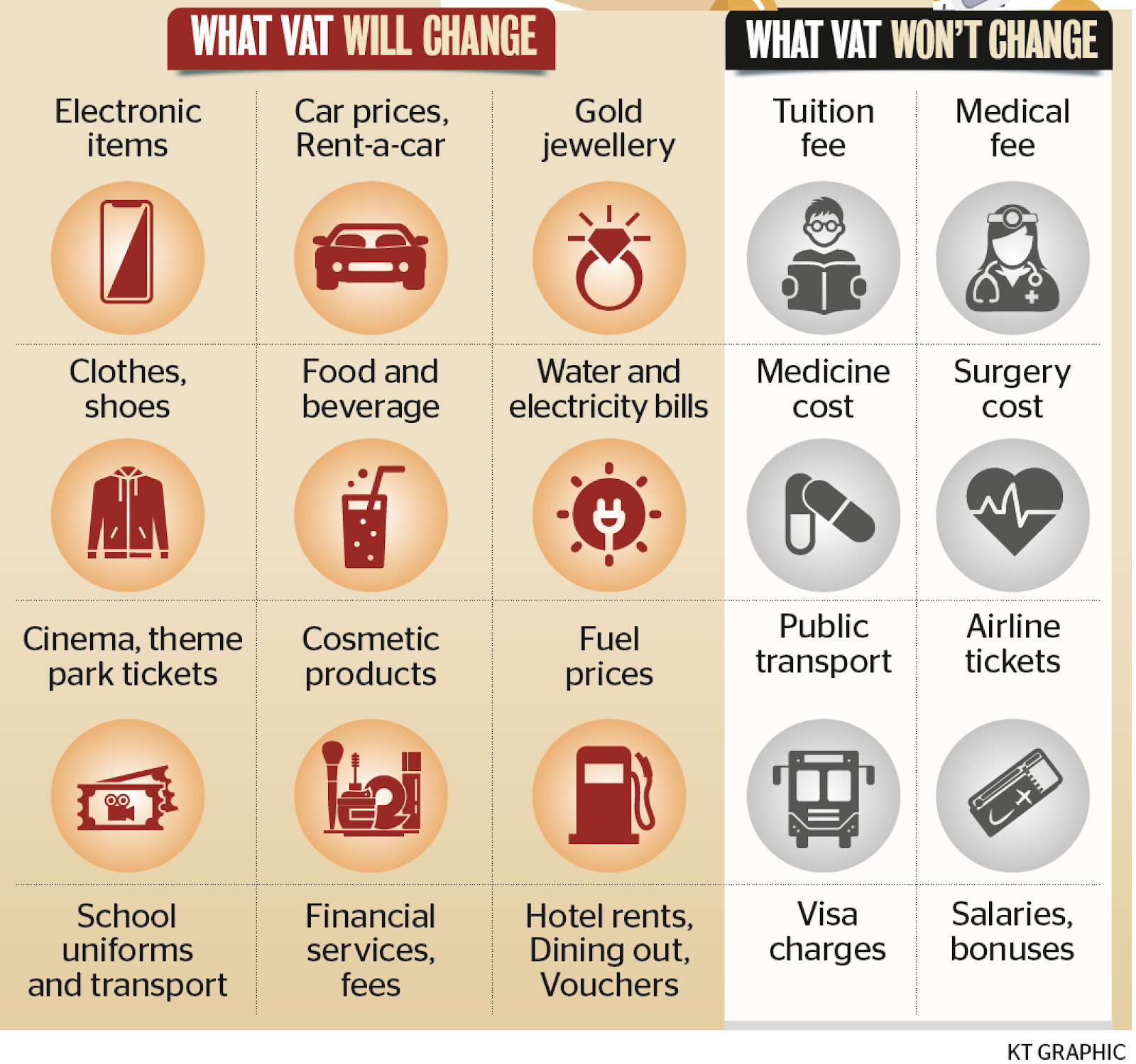
Government employees will not get any additional salary increase to compensate for VAT
During the FNC session held in its headquarters, FNC member from Sharjah, Dr Saeed Al Mutawa raised concerns over the impact VAT will have on consumers, the readiness of businesses, and VAT's impact on the overall national economy, with Obaid Humaid Al Tayer, Minister of State for Financial Affairs.
"Although VAT might appear minimal to consumers, it will be a burden once it is accumulated with water, electricity and gas bills," said the member.  However, the minister said there will be no salary increase, as it is not included in the 2018 federal budget.
"The draft law for 2018 federal budget, which the FNC will look into today, does not include any salary increases," announced the minister.
He said the government already introduced increases to the basic salary in a regular manner.
"This increase could be higher than the impact percentage of VAT," Al Tayer added.
Although the members argued that VAT could affect the consumers, the minister pointed out that the tax will not be implemented on health or school education.
However, Dr Al Mutawa said an official proposal should be raised to the government and presented to the Cabinet about how much Emiratis are spending after VAT takes effect and whether or not it will affect them.
The FNC member proposed that based on the evidence from the study, a salary increase should be given, in which members of the council voted in favour for.


December 13 with Dr. Sarah was a great conversation about parenting.

Click for the podcast.

Dr. Sarah Rasmi


I am a Canadian Psychologist (Ph.D.) and professor with a passion for supporting families. I work with parents across a range of family, relationship, and well-being issues, as well as those who want to learn new skills. I also consult with government entities, corporations, and schools.

Commonsensemedia .org
  • Effective parenting practices and strategies


6 830 000 results when you search this


http://capitalchoicecounselling.com/2016/01/3-effective-parenting-techniques-defined/

1. The Positive Parenting Techniques Style

2. The Unconditional Parenting Techniques Style

3. Authoritative Parenting Techniques Style

4. Attachment Parenting Techniques Style


  • Parent-child conflict & conflict resolution


  • Student achievement and success

  • Happiness and well-being

  • Adapting to life in a new country


Sunday, November 26, 2017

The Sleep Callin November 22, 2017 (Best UAE Podcast)

This week the callin is all about sleep and breaking the myths.

James Kelley is in the studio and we have Dr. Jeffrey Durmer co-founder, Chief Medical Officer of FusionHealth, an Atlanta-based sleep health technology company on the phone.


As usual this may be one of the most important 45 minutes of radio you listen to.

click here for the podcast


Here are the show notes.

Dr. Jeffry Durmer
Dr. Durmer graduated from the University of Pennsylvania School of Medicine in 1997. He works in Johns Creek, GA and specializes in Sleep Medicine.

How valuable is sleep to you?  Why don’t we treat it like any other benefit?
Author of several Huffington Post Articles.


Dr. Jeffrey Durmer is an adjunct professor at Georgia State University Department of Health Professions, and co-founder, Chief Medical Officer of FusionHealth, an Atlanta-based sleep health technology company. He is a neurologist, systems neuroscientist and sleep medicine physician with particular expertise in technology enabled sleep-health delivery systems. At FusionHealth he is responsible for the development of novel medical systems that provide scalable solutions using platform-based technology to diagnose, treat and manage sleep disorders in large employer and health system populations. Prior to FusionHealth, he directed the Emory University Sleep Laboratory program and the pediatric sleep medicine program where he trained medical students, residents and fellows. He has published multiple medical textbook chapters, original research papers and abstracts, and collaborated with international clinical research teams to develop the clinical criteria utilized to diagnose and treat Restless Legs Syndrome. ​Dr. Durmer is past-President of the Georgia Association of Sleep Professionals, 2 term-member of the Medical Advisory Board for the Restless Legs Foundation, and serves as the Sleep Medicine advisor to the Federal Aviation Administration.

001 404  771 2547


EHSToday

Programming Your Worker for A Good Night's Sleep

Sleep deprivation contributes to unsafe driving habits and loss of productivity on the job.
Stefanie Valentic | Dec 06, 2016

http://www.ehstoday.com/health/programming-your-worker-good-nights-sleep
15 million Americans work full time on evening shift, night shift, rotating shifts or other irregular work schedules, according to the Bureau of Labor Statistics. With these varying shifts comes an increased number of safety risks, most notably those associated with drowsy driving.
Estimates indicate more than 6,000 deaths annually can be attributed to drowsy driving while the actual instances of driving while sleep deprived are underreported, according to the National Highway Traffic Safety Administration.
"The components of creativity, judgement and vitality are the biggest part of the effect when it comes to whether people are going to sleep well," said Dr. Jeffrey Durmer, chief medical officer at FusionHealth.
The average adult needs seven to eight hours of sleep to be fully rested. However, even cutting back by one hour can cause a person to be less focused and slow his or her response time on the job, according to the National Heart, Lung and Blood Institute.
If a worker lacks sleep, they are more likely to show poor judgment and become complacent behind the wheel.  In fact, employees who work night shifts, rotating shifts, double shifts or work more than one job have a six-fold increase in drowsy driving crashes, according to the National Sleep Foundation.
Furthermore, staying awake for 17 hours or more could present the same effects as having alcohol in your bloodstream, Durmer said.
Durmer has focused his research as a neurologist, systems neuroscientist and board-certified sleep medicine physician on the effects of drowsy driving. He works directly with commercial trucking clients on identifying the risks associated with drowsy driving as well as the application of risk management programs to not only reduce incidents but also improve company performance and employee wellness.
An effective sleep program not only is a form of risk management, but a form of preventative healthcare because it improves the vitality and energy of employees well-being of employees, Durmer said.
Whether the underlying issue is health-related or behavioral, encouraging employees to consistently receive a good night's sleep and providing coaching to educate workers about sleep hygiene potentially could assist workers with the treatment and prevention of both underlying health issues while also reducing drowsy driving accidents.
"It just makes a lot of sense for businesses to implement programs that are more efficient, deliver directly and change the well-being of a company's employees," he said.
There are three factors that affect performance the most: quality of sleep, the quantity of sleep and the timing of sleep. When you change any of those variables are changed, the ability of sleep to impact performance on the job is affected.
However, even when an individual has enough time to get rest, medical conditions, living environment and personal choices can affect one's ability to obtain quality sleep, he said.
"Sleep loss is across the entire spectrum, young and old, and a large systematic problem,"Durmer said. "Employers need to look at the human performance of that specialized labor force so they can actually produce the best they can."

STOP: Do Not Pass Go

The warning signs of drowsy driving sometimes are hard to recognize. The National Sleep Foundation says if you recognize the following signs, you should not be driving:

  • Trouble focusing, keeping your eyes open or your head up.
  • Yawning or rubbing your eyes repeatedly.
  • Daydreaming and wandering thoughts.
  • Drifting from your lane, tailgating and missing signs or exits.
  • Feeling restless, irritable or aggressive.
  • Turning up the radio or rolling down the window.
  • Slower reaction time, poor judgment.

Saturday, November 18, 2017

The Happiness Callin November 15, 2017

Happiness is a big deal today.  The UAE has embraced happiness and this show was a checkup of sorts on how we are doing on the happiness agenda.

On the show this week is James Kelley, Drjameskelley.com.


Here is how the show went.

Click here for the podcast.


Are you Happy?


What makes you happy?


What do you need to be happier?


Happiness is a major part of the UAE’s National Agenda


Happiness and National Agenda

https://government.ae/en/about-the-uae/the-uae-government/government-of-future/happiness


Under the pillar of Cohesive Society and Preserved Identity of National Agenda, the UAE Government aims to make the country amongst the top five happiest countries in the world by 2021. Happiness Index, which is a composite indicator that measures an individual's assessment of his standards of living and satisfaction by using a survey is a key performance indicator in this regard.

National Programme for Happiness and Positivity

On 7 March 2016, H. H. Sheikh Mohammed bin Rashid Al Maktoum, Vice-President and Prime Minister of UAE and Ruler of Dubai reviewed National Programme for Happiness and Positivity presented by Sheikha Ohood.
The programme sets government policies, programmes and services that could promote virtues of positive lifestyle in the community and a plan for the development of a happiness index to measure people's satisfaction.
The programme covers three areas:
  1. inclusion of happiness in the policies, programmes and services of all government bodies and at work
  2. promotion of positivity and happiness as a lifestyle in the community
  3. development of benchmarks and tools to measure happiness.
The programme will include Emiratis as well as expatriate residents and visitors. It seeks to encourage government and private sectors to launch, recommend and adopt initiatives in that regard.
The plan will also include initiatives for publishing scientific and cultural contents, books on happiness, and encouragement of reading about the importance of positivity and happiness as a way of an integrated lifestyle.

The UAE as per World Happiness Report

UN World Happiness report 2017
According to UN World Happiness Report 2017, the UAE came first in the Arab world for the third consecutive year and ranked 21st as the happiest globally, advancing eight ranks.
The UAE would, however, rank 12th globally if only UAE nationals were taken into account, as the 2017 report included a separate table of results for nationals and non-nationals in some Gulf countries with varying scores.
UAE also ranked first globally regarding the satisfaction of residents from other countries.
World Happiness report 2016
report, which maps happiness on the parameters of GDP per capita, social support, healthy life expectancy, freedom to make life choices, generosity and perceptions of corruption.
As per World Happiness Report 2016, published by Sustainable Development Solutions Network (SDSN), a global initiative for the United Nations, the UAE was ranked 28th globally and 1st amongst Arab countries.
It was placed ahead of some of other advanced countries like France (at 32nd rank), Spain (at 37th rank) and Italy (at 50th rank). The report recognises that the UAE is amongst the four countries in the world that have a Minister of Happiness in their Cabinet.
The UAE has maintained its leading position in the Arab World since the report was launched four years ago; thus, realising its remarkable achievements in the political, economic, social, educational, health, tourism and environmental fields.


10 ways to find happiness!
World’s Happiest Countries!
Happiest Countries


1. Norway 7.54
2. Denmark 7.42
3. Iceland 7.5
4. Switzerland 7.49
5. Finland 7.47
6. Netherlands 7.38
7. Canada 7.32
8. New Zealand 7.321
9. Sweden 7.28
10. Australia 7.28


Saddest Countries


146. Yemen 3.59
147. South Sudan 3.59
148. Liberia 3.53
149. Guinea 3.51
150. Togo 3.49
151. Rwanda 3.47
152. Syria 3.46
153. Tanzania 3.35
154. Burundi 2.91
155. Central African Republic 2.69


Saturday, November 11, 2017

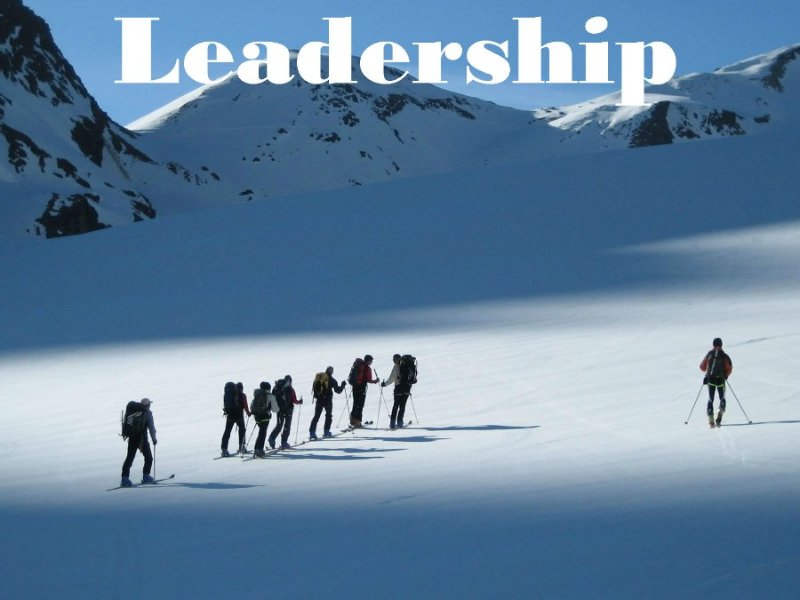
Leadership in Question November 8, 2017

What is authentic leadership anyway?

Dr. James Kelley and Yousef from the news are in the studio to join the conversation and see what we think about leadership in 2017.


Click to grab the podcast.


The show notes.

This week we are asking if leadership is born or learned?

And just because a person is an extrovert does that make them a better leader?

What is the leadership model in your organisation? Does it work? Is it learn as they go?

Maybe the question is how effective is the leadership in your organisation?


the answer is: ‘mostly made.' The best estimates offered by research is that leadership is about one-third born and two-thirds made. The job of leading an organization, a military unit, or a nation, and doing so effectively, is fantastically complex. To expect that a person would be born with all of the tools needed to lead just doesn't make sense based on what we know about the complexity of social groups and processes.


Research suggests that extraversion is consistently associated with obtaining leadership positions and leader effectiveness. There is also some evidence that being bold, assertive, or risk-taking can be advantageous for leaders. Leaders also need to be smart to analyze situations and figure out courses of action. So, intelligence is associated with leadership, but perhaps not general IQ, but social intelligence - understanding of social situations and processes - is the component of intelligence that is important for leadership. Finally, some sort of empathy, or ability to know followers, is also advantageous for leaders (although much of this is learned). As noted leadership scholar, Bernard Bass, noted, "The leader must be able to know what followers want, when they want it, and what prevents them from getting what they want."


In the same way, our beliefs about how people become leaders affect how we evaluate people’s leadership potential. Believing people are born leaders is likely to result in a focus more on selection (identify the right people) rather than on development (develop the people you get). On the other hand,

believing that people are made into leaders by
their experiences would be more likely to result in
a greater focus on making sure people had the
right opportunities to develop into leaders.


By failing to differentiate between leadership effectiveness (performance as a leader) and leadership emergence (being tapped for a leadership role), this research is often misunderstood and misused.  In fact, inborn traits are more strongly associated with leadership emergence. That is, within a group of peers, those who are more extraverted or more intelligent tend to have more influence on the group. Does this mean that these same people perform better than others when placed in a formal position of leadership? Not necessarily.

Unfortunately, we often choose our leaders based on traits such as extraversion, charisma, and intelligence (or perceived intelligence). And then we wonder why their performance does not live up to our expectations.


Leadership is an art rather than a science. It is a set of innate traits, refined and perfected over time with education, training and experience.
o;
There is also an aspect of being in the right place in the right time. You may be a leader but also a matter of whether or not you are in the position within which your talents can shine forth.
The discussion about leadership also needs to identify the location as well as the environment. Are we speaking about these major performers (born or made) in a small organization, in an industry, in a society, in a country or in the world?
If the fear of leading overrides the willingness to take on the responsibilities then one is a follower. Not everyone can be a leader just like not everyone can become a good actor. Some people will never have that aspect in them while others have the latent ability and thus can be taught how to lead. All the books, classes education and training cannot turn a follower into a leader.
To be a leader in a structured environment, one needs some formal training. Most people can learn to manage well, start a business, lead a project team since good management is based on rules - rules that can be learned and mastered.
Leadership is often a Choice. A leader is a person who comes forward to take the challenge. If a leader rises up from the multitude, then that person was already a leader to begin with. Should someone have all the best training, nurturing and opportunities, but would rather be hidden in the crowd, an unwilling participant...not a leader.
Leadership styles varies with maturity, followers and situations.
In the GLOBE research across 60 countries leader attributes conclusions were thus: “Integrity; charisma, inspirational, visionary, encouraging, positive, confidence builder, dynamic, foresight, effective team building, communicating, coordinating, decisive, intelligent, and win-win problem solver,” These attributes are a combination of personality, character, skill, communicative ability, and emotional intelligence. Therefore a leader is born, developed, skilled in communications, and cultivated through life experiences.
The best estimates offered by research is that leadership is about one-third born and two-thirds made.

It all depends on how one defines leadership. It is possible for either. Depending on how you define leadership everyone can lead and be a leader.


Saturday, November 04, 2017

The Call-in on workplace bullying

James Kelley, www.drjameskelley.com, is in the copilot seat as we talk about the issue of workplace bullying.

The question is are you a victim or the person giving the bullying?

James and James determine that there is no easy answer to this question.


It is always interesting to hear what our callers think.

Click for the podcast.


The Notes.


How do you deal with the office bully?
This is the person who puts you down, rains on your parade, passive aggressive, sews the seeds of discontent!


Ignore them?
Attack head on?
Go tell?
File a report with HR…


AGGRESSIVE JERK

This angry bully thrives on and excels at insults and name calling, Curry says. This type of bully isn’t concerned with keeping a low profile–they’re hard to miss because of their bombastic style. They’ll embarrass and humiliate you in front of others, and are often in a position of authority or have some other sort of power that allows them to do so.

SCORCHED-EARTH FIGHTER

This type of bully is cutthroat with a relentless need to come out on top, Curry says. But it’s not enough to win—his or her opponent has to lose. Scorched-Earthers pull out all the stops to make sure that the victims in their sites are hurt in some way. Many cyberbullies fall into this category, she says.

SPINELESS SUPERVISOR

Some bullies carry out their activities under the guise of “just doing what they’re told,” says workplace abuse expert Patricia G. Barnes, author of Surviving Bullies, Queen Bees, and Psychopaths in the Workplace. “The spineless supervisor agrees to do anything that management wants to get rid of employees—good employees—for reasons that have nothing to do with work,” she says. If a worker is likely to file a workers’ compensation or other claim, the Spineless Supervisor may try to intimidate or fire the person instead of dealing with the problem.

SHAPE-SHIFTER

When you tell others about the bullying you’ve experienced at the hands of this person, they may have a hard time believing you. The Dr. Jekyll and Mr. Hyde personality differences make the Shape-Shifter seem like two different people, Curry says. This bully is charming to those they seek to take advantage of or who offer opportunity to them, “but they’ve got their claws out for anyone else,” Curry says.

CHARACTER ASSASSIN

This gossipy bully tells stories and defames you behind your back, Curry says. This bully can be particularly dangerous, because your reputation may be damaged before you know it’s even happening or can defend yourself.

HOW TO DEAL WITH THEM

While bullies vary in type, surprisingly, dealing with them often requires a very similar set of tactics, Barnes says. But the key is to stop the bullying as soon as you start to see it happening.
“If you’re being targeted and bullied, it’s going to take a toll. It’s a surprisingly short amount of time before you’re a nervous wreck,” she says. So, if you’re dealing with a workplace bully, try these steps.
Ground yourself. The bully is looking for your reaction. If you show that you’re hurt or upset, “that’s going to make them happy as heck,” Curry says. Find a way to stay calm and work on your game face. Try to stay calm in the face of bullying.
Start documenting. Write down what happened and when, Barnes says. Keep detailed accounts of the circumstances, exactly what was said, and who, if anyone, heard or saw it.
Turn the tables. Sometimes, calling the bully’s bluff works, Curry says. Try responding to abusive statements such as, “You always mess up,” with “What would you have done differently?” If the bully responds with another smear, like “I would have just done it right to begin with,” ask for specifics. Often, the bully has nothing constructive to add and will back off, she says.
Find a champion. Your company may have a formal human resources process for dealing with bullies. If so, don’t wait to report egregious behavior, Barnes says. The bully could be damaging your reputation behind your back. If your company doesn’t have such a process, or if the person to whom you would report is the culprit, then try to find a champion elsewhere—another supervisor or leader in the company who can intervene on your behalf, she says. “That can be a very powerful strategy, and I’ve seen it work,” she says.


Research that Bradberry’s company conducted showed that “90% of top performers are skilled at managing their emotions in times of stress… (remaining) calm and in control,” he wrote. “One of their greatest gifts is the ability to neutralise toxic people. Top performers have well-honed coping strategies that they employ to keep toxic people at bay.”
Bradberry offered 12 of the most effective strategies these top performers use to deal with noxious people. Among them:
“Set limits (especially with complainers). People often feel pressure to listen to complainers because they don’t want to be seen as callous or rude, but there’s a fine line between lending a sympathetic ear and getting sucked into their negative emotional spiral,” Bradberry wrote. “You can avoid this only by setting limits and distancing yourself when necessary. A great way to set limits is to ask complainers how they intend to fix the problem. They will either quiet down or redirect the conversation in a productive direction.”
“Rise above. Toxic people drive you crazy because their behaviour is so irrational. Make no mistake about it; their behaviour truly goes against reason. Which begs the question, why do you allow yourself to respond to them emotionally and get sucked into the mix?,” wrote Bradberry. “The more irrational and off-base someone is, the easier it should be for you to remove yourself from their traps... Distance yourself from them emotionally and approach your interactions like they’re a science project.”
“Stay aware of (your) emotions. Maintaining an emotional distance requires awareness. You can’t stop someone from pushing your buttons if you don’t recognise when it’s happening. Sometimes you’ll find yourself in situations where you’ll need to regroup and choose the best way forward,” he wrote. “Sometimes it’s best to just smile and nod… (and) give yourself some time to plan.”
“Don’t focus on problems — only solutions. “Where you focus your attention determines your emotional state. When you fixate on the problems you’re facing, you create and prolong negative emotions and stress,. When it comes to toxic people, fixating on how crazy and difficult they are gives them power over you, Bradberry wrote. “Focus instead on how you're going to go about handling them. This makes you more effective by putting you in control.”
Victoria Pynchon, negotiation consultant at She Negotiates Consulting and Training
How do bullies get their power? When you respond to their aggressive tactics by conceding, wrote Pynchon in her post How to Negotiate With Bullies. So, what should you do instead?
“(Bullies) accuse, threaten, annoy, pester, shame, raise their voices, shake their fists and sometimes even get physically pushy,” wrote Pynchon. “So long as your mental and physical well-being is assured, understand that these are playground tactics and you are the playground monitor.”
In the office, “your best protection against the workplace bully is identifying the tactics he's using and resisting them without raising the stakes or escalating the conflict,” she wrote. “Keep a cool head, respond to contentious tactics with an even tone and demand rational responses.”
How, exactly, can you do this? For starters, take control. “If the conversation is starting to spiral out of control, use one of these immediate, quietly intoned, statements,” Pynchon wrote. Among the most effective: “’Let’s come back to this when you’re in a calmer state of mind (or) I’m going to terminate this discussion right now, but if you’re willing to continue… later in a more civil tone, I’m happy to reconvene’.”
“Push back against brutish conduct if need be, but do not fold, nor cut and run,” she wrote. Instead, be willing to end the conversation (or a negotiation) if needed. Don’t be taken in. “You are in control of you.”

Powered By Blogger